The Complete Guide to Batch Cooking: How to Prep a Full Week of Meals in Just 2 Hours on Sunday
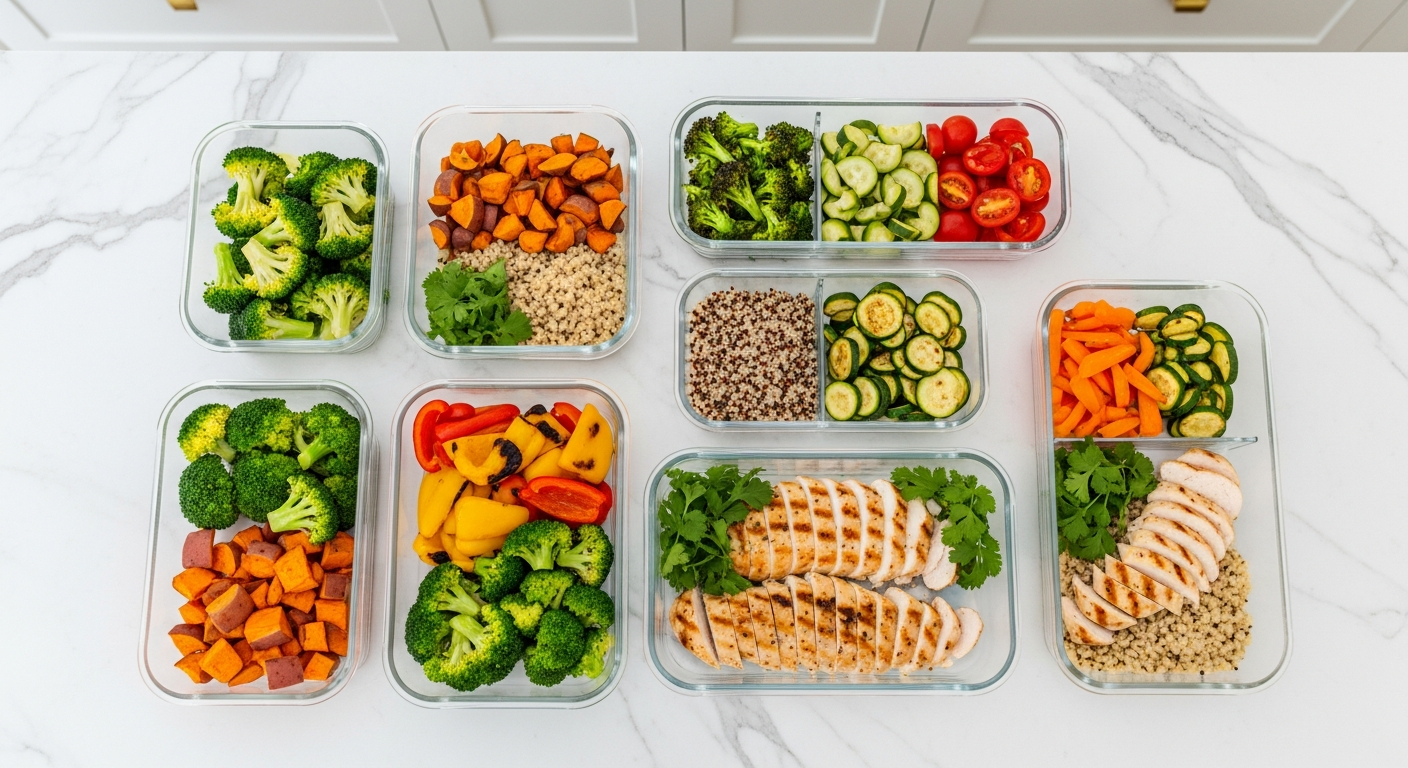
Batch cooking on Sunday is the single most effective habit for eating healthily during the week. Here is a complete, practical system for prepping a full week of varied, delicious meals in just two hours.
Why Sunday Meal Prep Actually Works The reason most people fail to eat well during the week is not lack of willpower, knowledge, or even time. It is decision fatigue combined with friction. After a long day of work, making a healthy meal from scratch feels like climbing a mountain. Opening a bag of chips feels like a light stroll. Batch cooking eliminates the friction. When Tuesday evening hits and you are exhausted, there is no decision to make — the food is already prepped, the ingredients already chopped, the proteins already cooked. You assemble rather than cook. You reheat rather than start from scratch. You eat well without suffering for it. This guide gives you a complete, practical system you can start this Sunday. The Core Philosophy: Cook Components, Not Whole Meals The biggest mistake people make with meal prep is cooking complete, specific meals — containers of Monday's chicken Alfredo, Tuesday's stir fry, Wednesday's tacos, and so on. This gets boring fast. By Thursday you are staring at your fifth pre-packed meal and dreading every bite. Instead, prep versatile components that can be mixed and matched into a dozen different meals. When you have cooked grains, roasted vegetables, a protein or two, a sauce, and some fresh elements in your fridge, you can build different meals every night without any additional cooking. The Five Categories to Prep Every Week 1. A Grain Base (Pick One or Two) Cook a large batch of grains that will serve as the foundation for bowls, salads, sides, and wraps throughout the week. Good options: Brown rice — versatile, filling, freezes beautifully Quinoa — cooks in 15 minutes, high in protein, works with any flavor profile Farro — chewy, nutty, excellent in salads and soups Pasta — cook al dente, toss with a little olive oil to prevent sticking, refrigerates well for 4–5 days How much to cook: 2 cups dry grain serves approximately 4 people per meal. For a family of 4 eating grain-based meals 4 nights per week, cook 8 cups dry grain (about 2–3 pots). 2. A Roasted Vegetable Medley Roasted vegetables are the workhorse of healthy batch cooking. They can go into bowls, wraps, salads, egg dishes, pastas, grain sides, and soups. Roast a large sheet pan (or two) of whatever vegetables are in season or on sale. Best roasting vegetables: broccoli, cauliflower, sweet potatoes, bell peppers, zucchini, cherry tomatoes, red onion, Brussels sprouts, carrots, beets, and asparagus. The method: Cut vegetables into similar-sized pieces, toss with olive oil, salt, pepper, and your seasoning of choice (garlic powder, smoked paprika, Italian herbs, cumin). Spread in a single layer on a sheet pan — do not crowd them or they will steam instead of roast. Roast at 425°F (220°C) for 20–35 minutes until caramelized at the edges. 3. A Batch-Cooked Protein Having pre-cooked protein in your fridge means any meal is 5 minutes away. Prep 2–3 different protein sources to avoid boredom: Baked chicken thighs or breasts: Season, bake at 400°F for 25–30 minutes, cool, slice or shred. Use in salads, tacos, wraps, pasta, or grain bowls. Hard-boiled eggs: Boil a dozen, refrigerate unpeeled. They keep for a week and serve as snacks, salad toppers, or a quick breakfast. Cooked lentils or chickpeas: Simmer a large batch for plant-based protein that goes into soups, curries, grain bowls, and salads. Seasoned ground beef or turkey: Brown and season with onion, garlic, and your preferred spices. Use across tacos, pasta sauces, rice bowls, and stuffed vegetables all week. 4. A Sauce or Dressing A good sauce transforms simple components into a complete, satisfying meal. Make one or two versatile sauces that work across multiple proteins and vegetables: Green tahini sauce: Blend tahini, lemon juice, garlic, fresh herbs (parsley, cilantro), and water to thin. Goes with everything Mediterranean or Middle Eastern. Creamy chipotle dressing: Greek yogurt, lime juice, chipotle in adobo, garlic, and cumin. Works for tacos, grain bowls, and salads. Simple ginger miso dressing: White miso, rice vinegar, sesame oil, ginger, and a bit of honey. Excellent with roasted vegetables, soba noodles, or salmon. Classic marinara: Sauté garlic in olive oil, add crushed tomatoes, simmer 20 minutes with basil and salt. Works for pasta, pizza, meatballs, eggs, and dipping. 5. Prepped Fresh Elements Fresh elements bring brightness and crunch that keep meals from feeling monotonous: Wash and dry lettuce greens; store in a salad spinner or wrap in a damp paper towel in an airtight container Chop a large batch of salad vegetables (cucumber, celery, red onion, radishes) Wash and dry fresh herbs (parsley, cilantro, dill) Slice citrus fruits for easy squeezing during the week Prepare overnight oats for the next 3 mornings (oats, milk or plant milk, chia seeds, fruit) A Sample Sunday Prep Session (2 Hours) Time Task 0:00–0:10 Preheat oven to 425°F. Chop all vegetables for roasting. Start a pot of grains on the stove. 0:10–0:25 Toss vegetables with olive oil and seasoning. Load two sheet pans. Put in oven. Season chicken thighs and put in a separate baking dish. 0:25–0:50 While oven works: hard-boil a dozen eggs. Make your sauce or dressing. Wash and prep fresh herbs and salad greens. 0:50–1:10 Rotate sheet pans if needed. Remove chicken when internal temp reaches 165°F. Start a second grain if needed. 1:10–1:30 Cool everything. Portion into containers. Prepare overnight oats for Mon/Tue/Wed. Label everything with the date. 1:30–2:00 Clean up. Inventory the fridge. Make a quick list of what meals you can make from your prepped components. Refrigerator Storage Guide Cooked grains: 5 days in the fridge, 3 months in the freezer Roasted vegetables: 4–5 days in the fridge Cooked chicken (whole pieces): 3–4 days in the fridge Shredded or sliced cooked chicken: 3 days (greater surface area = faster spoilage) Hard-boiled eggs (unpeeled): 1 week in the fridge Cooked lentils or chickpeas: 5 days in the fridge Sauces and dressings: 5–7 days in the fridge Washed salad greens: 3–4 days if dried thoroughly before storage Start Small You do not need to prepare every category in your first week. Start with just two: a grain and a protein. That alone will make your weeknights dramatically easier. Add a roasted vegetable component the following week. Build the habit before you build the system. The goal is not a perfectly stocked fridge every Sunday. The goal is to make eating well on a Tuesday night slightly easier than it was the week before. That small reduction in friction, repeated week after week, is what actually changes your eating habits over the long term. Conclusion Sunday batch cooking is one of the highest-leverage habits a home cook can develop. Two to three hours on one afternoon eliminates the daily friction of deciding what to cook, reduces food waste, cuts grocery spending, and makes it dramatically easier to eat well Monday through Friday. Start small with just one protein and two sides, build your system over a month, and watch your relationship with food transform. Looking for batch cooking ideas? Read our guide on 25+ things to make with cooked ground beef — one of the most versatile batch cooking proteins available — or browse our full dinner recipe collection for weekly menu inspiration. Frequently Asked Questions How long does batch cooked food keep in the refrigerator? Most cooked proteins (chicken, beef, fish, beans) keep safely for 3–4 days in airtight containers refrigerated below 40°F. Cooked grains like rice and quinoa last 5 days. Roasted vegetables last 4–5 days. Soups and stews last 4–5 days. Label every container with the prep date to stay organized and avoid waste. Should I season food before or after freezing? Season lightly before freezing, then adjust when reheating. Some spices — particularly garlic and pepper — intensify during freezing, which can make a dish taste overpowering after reheating. A light seasoning before, with a full flavor adjustment when serving, consistently produces the best results. What containers are best for meal prep? Glass containers with airtight lids are the gold standard — they do not absorb odors or stain, and they are microwave-safe, dishwasher-safe, and freezer-safe. For on-the-go lunches, BPA-free divided containers are lighter. Invest in containers that stack efficiently in your refrigerator to maximize space and make grab-and-go access easy. How do I avoid eating the same meal every day? Batch cook neutral bases rather than complete dishes. Cook plain rice, plain roasted vegetables, and a neutral protein seasoned only with salt and pepper. Then dress each meal differently throughout the week: Italian herbs one day, soy and sesame the next, taco spices on Wednesday. The variety comes from the sauces and seasonings, not from cooking different proteins every time.