How to Build a Perfect Salad: 8 Rules for Salads That Actually Fill You Up and Taste Amazing
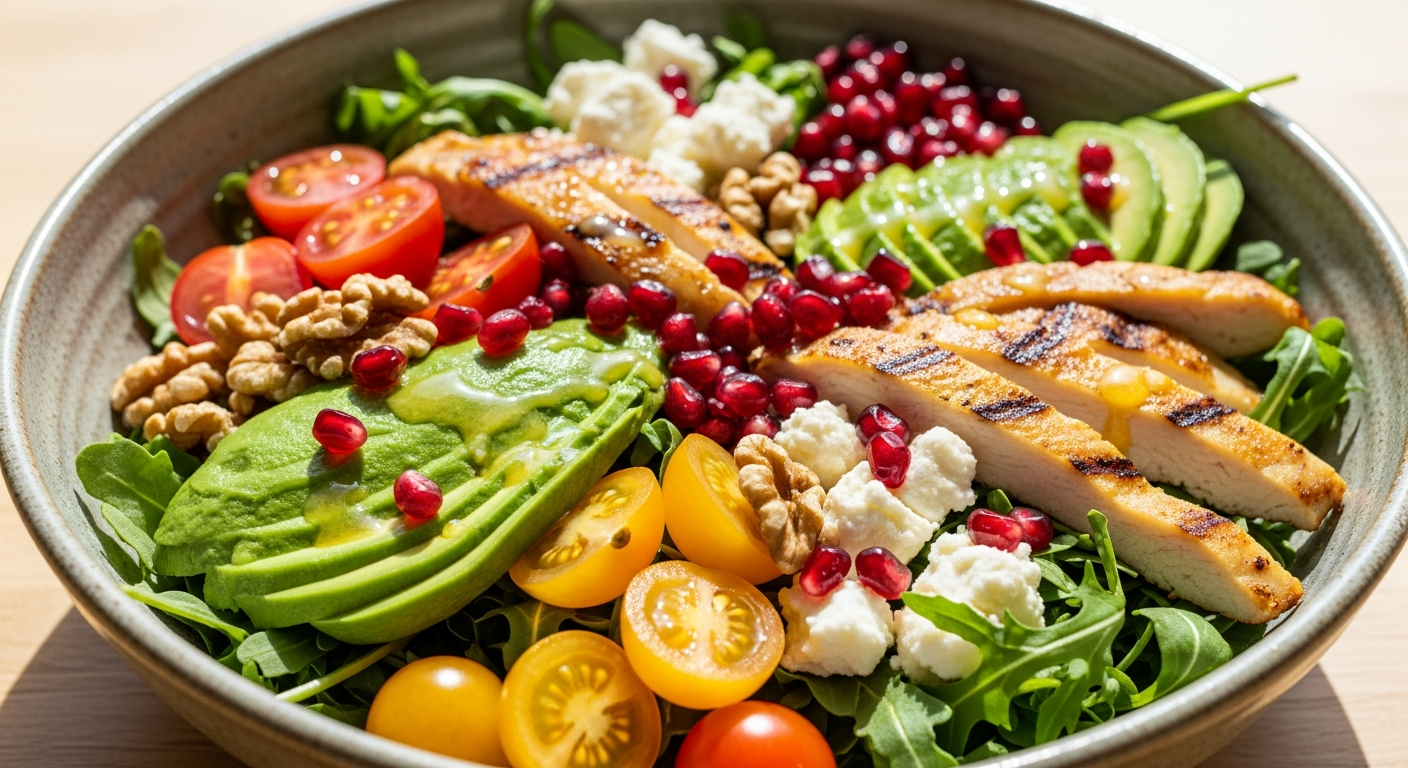
Most salads are unsatisfying because they break one or more of these 8 rules. Follow them and your salads will go from something you eat reluctantly to something you genuinely look forward to.
Why Most Salads Fail Let us be honest: most salads are bad. Not nutritionally — most salads are nutritionally fine. But as meals? They are often limp, underdressed, boring, and done within four minutes, leaving you hungry again by 3 PM. This is not the salad's fault. It is the construction. A great salad is not a pile of leaves with some toppings. It is a carefully balanced combination of textures, flavors, and nutrients — designed to be satisfying, interesting, and genuinely delicious. Here are eight rules for building salads that you will actually want to eat. Rule 1: Always Dress More Than You Think You Need The number one reason salads taste boring is under-dressing. People are afraid of calories or of overdoing it, so they drizzle on the absolute minimum. The result is dry, flavorless leaves. Every leaf and ingredient should be lightly coated. Dressing is not a condiment on the side — it is a seasoning applied to every component. Put your greens and toppings in a large bowl (much larger than you think you need), drizzle on more dressing than feels comfortable, and toss vigorously. Taste a leaf. Does it taste fully seasoned? Good. That is the target. Rule 2: Add a Protein That Actually Satisfies A salad without adequate protein is a snack, not a meal. For a salad to keep you full for 3–4 hours, you need at least 20–25 grams of protein. Best protein options for salads: Grilled or roasted chicken breast (especially thigh meat, which is more flavorful) Seared or canned salmon, tuna, or sardines Hard-boiled or soft-boiled eggs (2 eggs = about 12g protein) Chickpeas or white beans (hearty, filling, and add great texture) Grilled halloumi or crumbled feta for a vegetarian option with presence Shrimp, which cooks in 3 minutes and makes any salad feel luxurious Rule 3: Include a Crunchy Element Texture is what makes food interesting. A salad made of only soft ingredients — soft greens, soft avocado, soft tomatoes, soft cheese — is textural monotony. The brain wants contrast. Every great salad needs something crunchy: Croutons: Homemade croutons (cubed bread tossed in olive oil, garlic powder, and salt, baked at 375°F for 15 minutes) are exponentially better than store-bought and take almost no effort. Toasted nuts: Walnuts, pecans, almonds, pine nuts, or pistachios. Toast briefly in a dry pan for a warm, deepened flavor. Seeds: Pumpkin seeds (pepitas), sunflower seeds, or sesame seeds add crunch and nutrition without overpowering other flavors. Crispy chickpeas: Drain and dry canned chickpeas thoroughly, toss with olive oil and spices, roast at 425°F for 25–30 minutes until crackly. Fried shallots: These can be made at home or bought pre-made (common in Asian grocery stores). They add an extraordinary savory crunch. Rule 4: Use a Mix of Greens (Not Just Iceberg) Different greens bring different flavors, textures, and nutrients to a salad. Using a single type of lettuce is a missed opportunity. Romaine for crunch and heartiness Arugula for a peppery bite that plays beautifully against sweet or creamy elements Baby spinach for a neutral, tender base that plays well with everything Butter lettuce for a soft, slightly sweet backdrop to bold toppings Radicchio for bitterness that pairs wonderfully with sweet dressings or fruit Kale (massaged) for hearty salads that hold up to advance dressing A simple 3-ingredient mix of romaine, arugula, and baby spinach delivers crunch, pepper, and tenderness — and covers all your nutritional bases. Rule 5: Balance the Flavors (Sweet, Salty, Acidic, Bitter) The best salads function like the best dishes — they balance contrasting flavors so each bite is interesting. Think about including: Something sweet: Dried cranberries, sliced apple, pear, mango, peach, roasted beets, or corn Something salty: Cheese (feta, Parmesan, blue cheese), capers, olives, or anchovies Something acidic: Your dressing should provide acid, but a squeeze of fresh lemon or lime right before serving brings everything alive Something bitter: Radicchio, endive, arugula, or shaved Brussels sprouts You do not need all four in every salad, but hitting two or three creates dramatically more complexity than a single-note bowl of leaves. Rule 6: Make Your Own Dressing (It Takes 2 Minutes) Most bottled salad dressings are made with cheap oils, excess sugar, preservatives, and stabilizers. More importantly, they tend to taste artificially bright and one-dimensional compared to a quick homemade version. The formula for any vinaigrette is simple: 1 part acid + 3 parts oil + salt + flavor For example: 1 tablespoon red wine vinegar 1 teaspoon Dijon mustard (this acts as an emulsifier, holding the dressing together) ½ teaspoon honey 3 tablespoons extra-virgin olive oil Salt and black pepper Combine in a jar, shake vigorously, taste, adjust. That is it. This takes 90 seconds and tastes far better than anything bottled. Other great base vinegars to try: sherry vinegar, champagne vinegar, apple cider vinegar, balsamic (especially white balsamic for lighter dressings), and citrus juices. Rule 7: Add a Creamy or Fatty Element Fat is what makes food feel satisfying. A salad that contains only lean protein, vegetables, and a light vinaigrette will feel light in the bad way — you will be hungry again quickly. Include at least one creamy or fatty element: Avocado — the crowd favorite for good reason. Creamy, mild, and packed with healthy monounsaturated fats. Cheese — crumbled feta, shaved Parmesan, burrata (for special occasions), or fresh mozzarella A creamy dressing — tahini-based, yogurt-based, or a proper Caesar Nuts — while they provide crunch (Rule 3), they also deliver significant fat and make salads significantly more satiating Rule 8: Dress the Salad Just Before Serving This seems obvious but is frequently ignored in meal prep contexts. Dressed salads become soggy within 20–30 minutes as the salt in the dressing draws moisture out of the vegetables and wilts the greens. For lunch prep, pack your dressing in a separate small container and dress the salad immediately before eating. Even a 2-hour delay makes a significant difference in texture and enjoyment. Exception: Grain-based salads (farro, quinoa, lentil) and kale salads actually benefit from advance dressing — the sturdier ingredients absorb the dressing and improve with time. The Blueprint for a Perfect Salad Start with a 3-4 cup base of mixed greens. Add a palm-sized portion of protein. Include a handful of crunchy element. Add one creamy/fatty component. Include one or two sweet or acidic fresh elements (fruit, pickled onions, cherry tomatoes). Add your cheese. Drizzle generously with homemade dressing and toss until every piece is coated. Taste. Adjust salt and acid. Eat immediately. Follow this blueprint and you will never eat a boring, unsatisfying salad again. Conclusion A truly great salad is not a compromise or a concession — it is a full meal designed to satisfy, nourish, and impress. The secret is always in the architecture: a sturdy base, a variety of textures, a balanced dressing, and the willingness to treat the salad as seriously as any other dish on your menu. Once you internalize the five-element framework covered in this guide, you will never make a boring salad again. Explore more fresh and healthy recipes in our healthy recipe collection , or take your healthy cooking further with our guide on 10 superfoods to cook with every week . Frequently Asked Questions How do I keep a packed salad from getting soggy at work? Always pack dressing separately and add it just before eating. Store wet ingredients (tomatoes, cucumbers) separately from greens when possible. Choose heartier greens like romaine, kale, or radicchio that hold up better under dressing than delicate baby spinach. When layering in a jar, put dressing at the bottom, followed by hard vegetables, grains, protein, and greens at the top. What makes a salad filling enough to be a complete meal? A satisfying meal salad needs protein, fat, and fiber. Protein (chicken, chickpeas, eggs, salmon, cheese) prevents hunger from returning quickly. Healthy fat (avocado, olive oil dressing, nuts, seeds) promotes satiety and helps absorb fat-soluble vitamins. Fiber from vegetables and added grains slows digestion. Without all three, a salad will leave you hungry within an hour. What is the best dressing-to-greens ratio? Start with 1–2 tablespoons of dressing per 2 cups of greens. The goal is a light, even coating — not saturated leaves. Add dressing in small amounts, toss thoroughly, and add more only if needed. Over-dressed salad is one of the most common mistakes and the primary reason salads become soggy and unappetizing. Which salad greens are most nutritious? Arugula, kale, spinach, watercress, and radicchio are among the most nutrient-dense salad bases. Romaine offers excellent vitamin K and C with a mild, crowd-pleasing flavor. For maximum nutrition and flavor complexity, mix a variety of greens rather than relying on a single type throughout the week.