How to Master the Art of Seasoning: The Skill That Separates Good Cooks From Great Ones
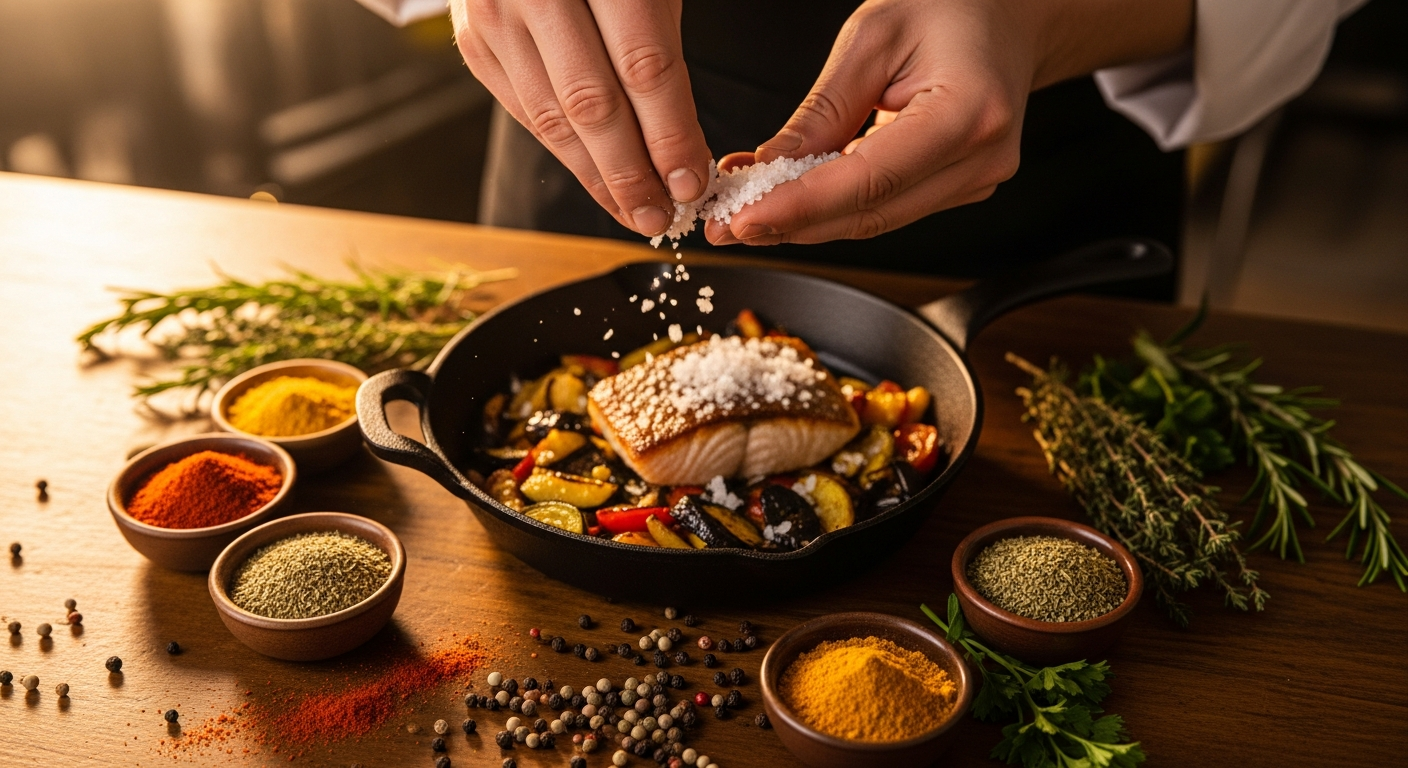
Great seasoning is the single skill that separates a good cook from an extraordinary one. It is not about using more salt — it is about knowing when, how, and with what to season at each stage of cooking.
The Most Underrated Skill in Cooking Ask any professional chef what separates home cooks from professionals, and the answer is almost always the same: seasoning. Not technique, not equipment, not fancy ingredients. Seasoning. Most home cooks season their food once — at the end, after everything is cooked, with a shake of the salt shaker at the table. Professional cooks season at every single stage of the cooking process. That is the difference between food that tastes okay and food that makes people ask "what is your secret?" This guide will teach you everything you need to know about seasoning food properly — from understanding what salt actually does, to building layered flavors with acids, fats, and aromatics. Understanding What Salt Actually Does Salt does not just make food taste salty. At the right concentration, salt suppresses bitterness, enhances sweetness, and amplifies every other flavor in the dish. It is essentially a flavor amplifier built into your pantry. When you add salt to food, it penetrates the surface of the ingredients and draws out moisture. This is why salting vegetables before cooking draws out water — and why salted meat browns better (less surface moisture means better caramelization). The goal of seasoning is not to make food taste salty. It is to season to the point where you can taste the full potential of the ingredients without tasting the salt itself. If you can distinctly taste salt, you have gone too far. If the food tastes flat and one-dimensional, you have not gone far enough. The Three Moments You Must Season 1. Before and During Cooking Season your proteins before they go into the pan, not after. Salting a chicken breast 20 minutes before cooking (or ideally overnight in the fridge) allows the salt to penetrate deeply, seasoning the meat all the way through rather than just on the surface. This is why brined chicken is so much more flavorful than unseasoned chicken. Season your pasta water generously — it should taste like sea water. This is the only chance you have to season pasta itself from the inside out. No amount of well-seasoned sauce will compensate for bland pasta noodles. Season vegetables before they go into a hot pan or oven. This draws out moisture and ensures they cook and brown properly rather than steaming in their own liquid. 2. During Cooking (Layering) As flavors develop, they change. Onions that are raw taste sharp and pungent; after 20 minutes of gentle cooking, they turn sweet and complex. Those sweetened onions need different seasoning than raw ones. Taste your food as it cooks — every 5–10 minutes for long-cooked dishes. Adjust seasoning incrementally rather than dumping in large amounts at once. 3. Just Before Serving (The Finishing Touch) A final adjustment right before serving is often the difference between a good dish and a great one. This might be a squeeze of lemon juice to brighten a cream sauce, a pinch of flaky salt on a piece of chocolate cake, or a drizzle of your best olive oil over a bowl of soup. Finishing seasoning is different from cooking seasoning — it is lighter, more intentional, and often involves ingredients beyond just salt. The Four Elements of Flavor Balance Professional chefs think about seasoning as balancing four key elements: salt, acid, fat, and heat/sweetness. When a dish tastes like something is missing — when it is flat, or too sharp, or just not quite right — the solution is almost always adjusting one of these four elements. Salt As discussed, salt is the foundation. But there are many types of salt, and they are not interchangeable: Kosher salt (Diamond Crystal or Morton's) is the go-to for most cooking — large flakes, no additives, easy to pinch and measure. Fine sea salt dissolves quickly and is great for baking where precision matters. Flaky sea salt (Maldon is the benchmark) is for finishing only — its crunchy texture and pure flavor are lost when cooked. Table salt has a harsh, slightly metallic flavor due to additives. Avoid it in cooking. Acid This is the secret weapon most home cooks never use. Acid — from lemon juice, lime juice, vinegars, wine, tomatoes, or yogurt — brightens and lifts flavors in a way that nothing else can. A dish that tastes flat after correct salting almost always needs acid, not more salt. The classic test: make a pot of vegetable soup and taste it. Season with salt until it tastes almost right, then squeeze in half a lemon's worth of juice. The soup will suddenly taste three-dimensional and vibrant. The lemon does not make it taste lemony — it makes it taste more like itself. Fat Fat carries and delivers flavor. It also adds richness and mouthfeel that make food feel satisfying. A sauce finished with a knob of cold butter (a technique called monter au beurre ) transforms into something silky and restaurant-quality. A drizzle of olive oil over roasted vegetables at serving adds both richness and a fresh, grassy note. Heat and Sweetness A touch of sweetness (honey, sugar, maple syrup) rounds off harsh or overly acidic flavors. A pinch of cayenne or a splash of hot sauce adds complexity and makes other flavors seem more vivid. Both should be used lightly as correction tools, not as primary seasonings. Building a Seasoning Repertoire With Spices A well-stocked spice drawer is one of the most powerful tools in any kitchen. But spices lose their potency over time — if your spices are more than 1–2 years old, they have lost most of their flavor and should be replaced. Start with these essential spices and learn them one at a time: Smoked paprika: Adds depth and a subtle smokiness to roasted meats, soups, rice dishes, and egg dishes. It transforms ordinary dishes. Cumin: Earthy, warm, and slightly bitter. Essential for Mexican, Indian, and Middle Eastern cooking. Toast whole cumin seeds briefly in a dry pan for extraordinary depth. Coriander: Pairs naturally with cumin. Lighter and more citrusy. Excellent in spice rubs, soups, and marinades. Turmeric: Mild, earthy, and intensely golden. Invaluable for curries, golden milk, rice dishes, and scrambled eggs. Red pepper flakes: A pinch lifts almost any savory dish, from pasta to pizza to roasted vegetables. Bay leaves: Drop two or three into any long-simmered liquid — stocks, soups, stews, rice. The flavor is subtle but the difference when you forget them is noticeable. The Most Important Rule Taste everything. Constantly. Before, during, and after cooking. More than any technique or recipe tip, the habit of tasting and adjusting your food throughout the cooking process is what will make you a dramatically better cook faster than anything else. Great seasoning is not a gift. It is a learnable skill. And the only way to learn it is to taste, adjust, and pay attention. Conclusion Seasoning is the single skill that separates confident home cooks from hesitant ones. It is not about following a recipe exactly — it is about tasting, adjusting, and building your palate over time. Start with salt and acid (lemon juice or vinegar), and you will be amazed how dramatically they transform every dish. The more you practice, the more natural and instinctive seasoning becomes. Ready to put your seasoning skills to work? Browse our full recipe collection or learn how to apply these techniques in batch cooking and meal prep for even greater kitchen efficiency. Frequently Asked Questions When is the best time to add salt during cooking? Season at every stage of cooking, not just at the end. Salt meats before cooking (even 30 minutes ahead makes a noticeable difference). Salt pasta water generously before adding the pasta. Add salt to vegetables when they hit the pan. A final taste and adjustment at the end rounds everything out. Front-loading seasoning throughout cooking produces far more flavorful results than a heavy salt addition at the table. What is the difference between table salt, kosher salt, and sea salt? The main difference is grain size and density. Table salt has very fine grains and a sharper taste due to additives like iodine. Kosher salt has larger, flakier grains that are easier to pinch and distribute evenly — it is the preferred cooking salt for most professional cooks. Sea salt has a pleasant mineral flavor and is best used as a finishing salt sprinkled on just before serving. How do I fix an over-salted dish? Add more of other ingredients to dilute the salt: add more water or unsalted broth to soups, more vegetables or protein to stews, or a peeled raw potato and simmer for 10 minutes (it absorbs some salt). A squeeze of lemon juice or a small amount of sugar can also balance excessive saltiness by engaging the other taste receptors. How do I build a spice collection without spending a lot? Start with eight core spices: cumin, smoked paprika, chili powder, garlic powder, onion powder, dried oregano, cinnamon, and black pepper. These cover a remarkable range of cuisines and can be combined to create dozens of flavor profiles. Buy them from bulk bins at health food stores or ethnic grocery markets for fresher spices at a fraction of the supermarket price.