Mastering Seasoning and Spices: The Complete Home Cook's Guide
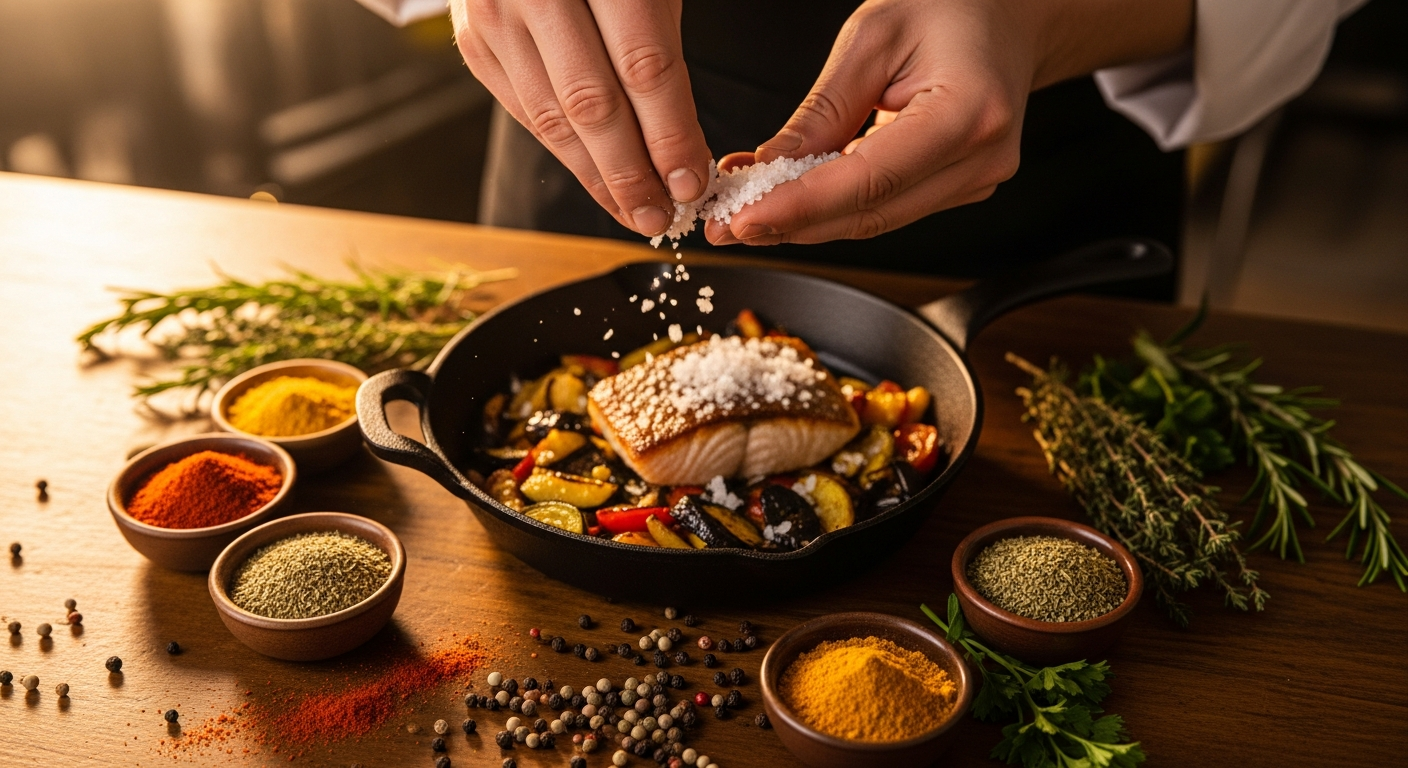
Seasoning is the most important skill in cooking — and the most teachable. This complete guide covers salt, acid, spice building, blooming, global combinations, and how to fix every seasoning mistake.
Every experienced cook will tell you the same thing: seasoning is the most important skill in the kitchen, and it cannot be learned from a recipe alone. You can follow an ingredient list to the letter and still produce food that tastes flat, one-dimensional, and unmemorable. The cause is almost always inadequate, mistimed, or imbalanced seasoning. This complete guide covers everything from the science of how salt and acid work to building a professional-level spice collection, global spice pairings, and the most common seasoning mistakes along with precise fixes. By the end, you will season by instinct rather than instruction — which is exactly where great cooking begins. The Science of Flavor: Understanding the Five Tastes Human taste perception recognizes five primary tastes: salty, sweet, sour (acidic), bitter, and umami (savory). Great food — and great seasoning — involves balancing and layering these tastes so that no single one dominates and all work together in harmony. Salt does not just make food taste salty — it suppresses bitterness, enhances sweetness, and amplifies umami. A dish that tastes dull or flat is almost always under-salted. Salt also draws moisture from proteins and vegetables through osmosis, concentrating flavors and improving texture over time. Acid (lemon juice, vinegar, wine, fermented ingredients) brightens flavors by providing contrast. A squeeze of lemon at the end of cooking cuts through richness, lifts flat flavors, and makes every other ingredient taste more defined and present. If a dish tastes "almost right but something is missing," it is usually acid. Fat carries flavor compounds and coats the palate, allowing flavors to linger longer. Fat-soluble aromatic compounds in spices and herbs are released more fully when bloomed in oil or butter — which is why spices cooked in fat taste dramatically more intense than those added to water-based dishes. Umami (from aged cheeses, tomato paste, fish sauce, soy sauce, mushrooms, miso, and anchovies) adds a savory depth and length to dishes that salt alone cannot produce. Building umami through one or two high-intensity ingredients is one of the fastest ways to make any dish taste more complex and restaurant-worthy. Salt: The Foundation of All Seasoning Types of Salt and When to Use Them Kosher salt is the professional chef's workhorse. Its large, flaky grains are easy to pinch and distribute evenly, have no additives, and produce a clean, pure salt flavor. Use it throughout the cooking process — seasoning proteins, salting pasta water, tossing vegetables, and finishing dishes. The two most common brands are Diamond Crystal (lighter, more delicate) and Morton (denser — use about half as much if substituting). Flaky sea salt (Maldon being the most recognized) is best used as a finishing salt — sprinkled over dishes just before serving for a textural contrast and focused burst of salt. Its subtle mineral notes and dramatic visual impact are wasted under heat. Use it to finish steaks, roasted vegetables, caramels, chocolate desserts, and salads. Table salt has very fine grains and contains iodine, which can impart a faintly metallic flavor when used in large quantities. Best reserved for baking, where precision and fine grain size are important. When to Add Salt The professional approach is to season at every stage of cooking, not just at the end. Early salt penetrates proteins and vegetables, seasoning from within rather than just coating the surface. Final salt adjusts the overall balance. The difference in taste between food seasoned early and food salted only at the table is dramatic and immediate. Before cooking proteins: Salt meats at least 30 minutes before cooking, or overnight uncovered in the refrigerator for the best results. This dry-brining process draws moisture to the surface then reabsorbs it along with the dissolved salt, deeply seasoning the interior. When building dishes: Season each layer — onions when they hit the pan, proteins before browning, vegetables as they go in. Pasta water: Should taste "pleasantly salty" — roughly 1–2 teaspoons of kosher salt per quart of water. This is the only opportunity to season pasta from the inside out. Finishing: A final taste and adjustment before serving captures any balance issues that developed during cooking. Building Your Spice Collection A well-stocked spice collection extends your cooking range from one cuisine to virtually unlimited. The key is beginning with high-utility spices that cross many cuisines, then expanding toward specialty items as your cooking broadens. The Essential 12 — Start Here Cumin — foundational to Mexican, Indian, Middle Eastern, and North African cooking. Earthy, warm, slightly smoky. One of the most-used spices in the world. Smoked paprika — deep red, smoky, slightly sweet. Adds complexity to almost any savory dish. Among the most versatile spices in a home cook's collection. Black pepper (whole, freshly ground) — pre-ground pepper loses volatile oils rapidly. Always grind fresh. The difference is immediately noticeable. Garlic powder — distinct from fresh garlic; provides a mellower, rounder garlic flavor especially useful in dry rubs and spice blends. Onion powder — similarly useful where texture of fresh onion is undesirable, as in dry rubs or smooth sauces. Chili powder — a blend (typically cumin, dried chili, garlic, oregano) essential for American and Tex-Mex cooking. Dried oregano — bright, peppery, and robust; foundational to Italian, Greek, and Mexican cooking. Cinnamon — used in both sweet and savory cooking globally; adds warmth and depth to North African, Indian, and Persian dishes. Cayenne pepper — pure, clean heat without flavor complexity. Far easier to control than chili flakes. Dried thyme — earthy, slightly floral; essential for French and general European-style cooking. Turmeric — earthy, slightly bitter, anti-inflammatory; adds vibrant yellow color to curries, rice, soups, and scrambled eggs. Coriander (ground) — bright, citrusy, slightly nutty; pairs beautifully with cumin and appears in virtually every cuisine that uses cumin. Buying and Storing Spices Spices do not "go bad" in the sense of becoming unsafe, but they lose potency rapidly. Ground spices are typically viable for 1–2 years; whole spices for 2–4 years. Store in airtight containers in a cool, dark location away from the stove — heat, light, and moisture accelerate deterioration. Test potency by rubbing a small amount between your fingers: the aroma should be immediately intense. Weak or absent aroma means the spice needs replacing. Buy from bulk bins at ethnic grocery markets or health food stores for significantly fresher spices at a fraction of the supermarket jar price. High turnover in bulk bins means spices were ground more recently and retain more volatile flavor compounds. Blooming Spices: The Professional Technique Blooming — briefly heating spices in fat before adding other ingredients — is one of the highest-impact techniques for maximizing spice flavor. Heat activates and releases the fat-soluble aromatic compounds responsible for a spice's character, dramatically amplifying both flavor and aroma. The difference between bloomed and un-bloomed cumin is remarkable enough to taste in a blind comparison. To bloom spices: heat oil in a pan over medium heat, add spices, and cook for 30–60 seconds, stirring constantly, until fragrant and slightly darkened. Add liquid, aromatics, or other ingredients immediately after to prevent burning. This technique is foundational to Indian, North African, and Thai cooking, but improves virtually any cuisine that uses dried spices. Global Spice Combinations to Master Understanding the flavor profiles of each major world cuisine allows you to create authentic-tasting dishes from memory: Mexican and Tex-Mex: Cumin + chili powder + garlic powder + oregano + smoked paprika. Optional: coriander, cayenne, onion powder. Indian North: Cumin + coriander + turmeric + garam masala + ginger. Optional: cardamom, mustard seeds, fenugreek. Italian: Dried oregano + dried basil + garlic + red pepper flakes. Optional: thyme, rosemary, fennel seeds. Chinese Five-Spice: Star anise + cloves + cinnamon + Sichuan pepper + fennel. Used for braised meats and rich marinades. North African Moroccan: Cumin + coriander + cinnamon + ginger + turmeric + smoked paprika. Optional: full ras el hanout blend. Middle Eastern: Cumin + coriander + cinnamon + allspice + za'atar. Finished with sumac for tartness. Ethiopian Berbere: Chili + fenugreek + coriander + cardamom + allspice + ginger + cinnamon. Complex, deeply warming, and unlike anything in Western cooking traditions. Common Seasoning Mistakes and How to Fix Them Over-salted food: Add more of other ingredients to dilute. For soups: add more unsalted broth or water. For stews: add more vegetables or protein. A peeled raw potato simmered in over-salted soup for 15 minutes absorbs some salt. A squeeze of lemon juice or small amount of sugar can also balance the perception of excessive saltiness by engaging other taste receptors. Food that tastes flat despite proper salting: The missing element is almost always acid. Add a small squeeze of lemon juice or a splash of wine vinegar and taste again. This is often a more dramatic fix than additional salt. Bland spiced dishes: Check three things: were the spices bloomed in fat? Are the spices fresh (do they smell intensely aromatic when rubbed)? Is the dish properly salted? Salt amplifies spice flavors significantly — an under-salted spiced dish will always taste flat regardless of how much spice is present. Bitter flavors: Bitterness comes from burned spices, over-reduced wine, or excessive bitter vegetables. Salt suppresses bitterness — add and taste. Small amounts of fat (cream, butter, coconut milk) coat the palate and reduce bitter perception. Sugar in very small amounts also balances bitterness through contrast. Conclusion Mastering seasoning and spices is a skill that compounds over time. Your first year of intentional practice will produce noticeably better food. Your third year will produce food that genuinely surprises people — not because of elaborate techniques or expensive ingredients, but because every dish is perfectly balanced and deeply flavored from within. Start with the essential 12 spices. Practice blooming them. Season at every stage. Taste constantly. Use acid when flavors fall flat. Build the habit of asking "what does this dish need?" rather than "what should I add?" — and you will develop the intuition that separates great cooks from merely competent ones. Apply these techniques with our original seasoning guide , browse our full recipe collection , or use your new skills in a batch cooking session to season an entire week of meals efficiently and confidently. Frequently Asked Questions How do I know when I have added enough salt? Properly seasoned food tastes like itself — more concentrated, vibrant, and forward — not overtly salty. When under-salted, flavors seem muted and flat, with an almost dusty quality. When over-salted, saltiness becomes the dominant and only noticeable flavor. Add salt in small increments (a pinch at a time for small dishes, ¼ teaspoon for large batches), taste after each addition, and stop when the food tastes fully present and alive. Should I toast whole spices before grinding? Yes — dry-toasting whole spices in a skillet over medium heat for 1–2 minutes until fragrant before grinding significantly improves flavor depth and complexity. Heat activates volatile aromatic compounds that grinding alone releases less effectively. Toast in a dry skillet without oil, shake frequently to prevent burning, and grind immediately after cooling for the most intense, freshest flavor. This technique is especially impactful for cumin, coriander, fennel, and black pepper. How should I season meats before cooking? Season proteins in advance whenever possible. For steaks and chicken: 30–60 minutes before cooking at minimum, or overnight uncovered in the refrigerator for optimal results. This dry-brining process draws moisture to the surface and then reabsorbs it along with dissolved salt, seasoning the interior deeply while simultaneously drying the exterior surface for better browning and crust formation. What is the difference between fresh herbs and dried herbs? Fresh herbs are best used raw or added at the end of cooking — their flavor is bright, volatile, and dissipated quickly by heat. Dried herbs are more concentrated and heat-stable, making them better for long-cooked dishes like soups, stews, and braises. A general conversion is 1 tablespoon fresh equals 1 teaspoon dried. Heartier herbs like thyme and rosemary retain flavor better during cooking than delicate ones like basil, parsley, and chives, which are best added only at the end or raw.