Technique
How to Make Chicken Broth From Bones
How to make chicken broth from a rotisserie or roast chicken carcass: ingredients, simmering time, how to keep it clear, and how to store and freeze it.
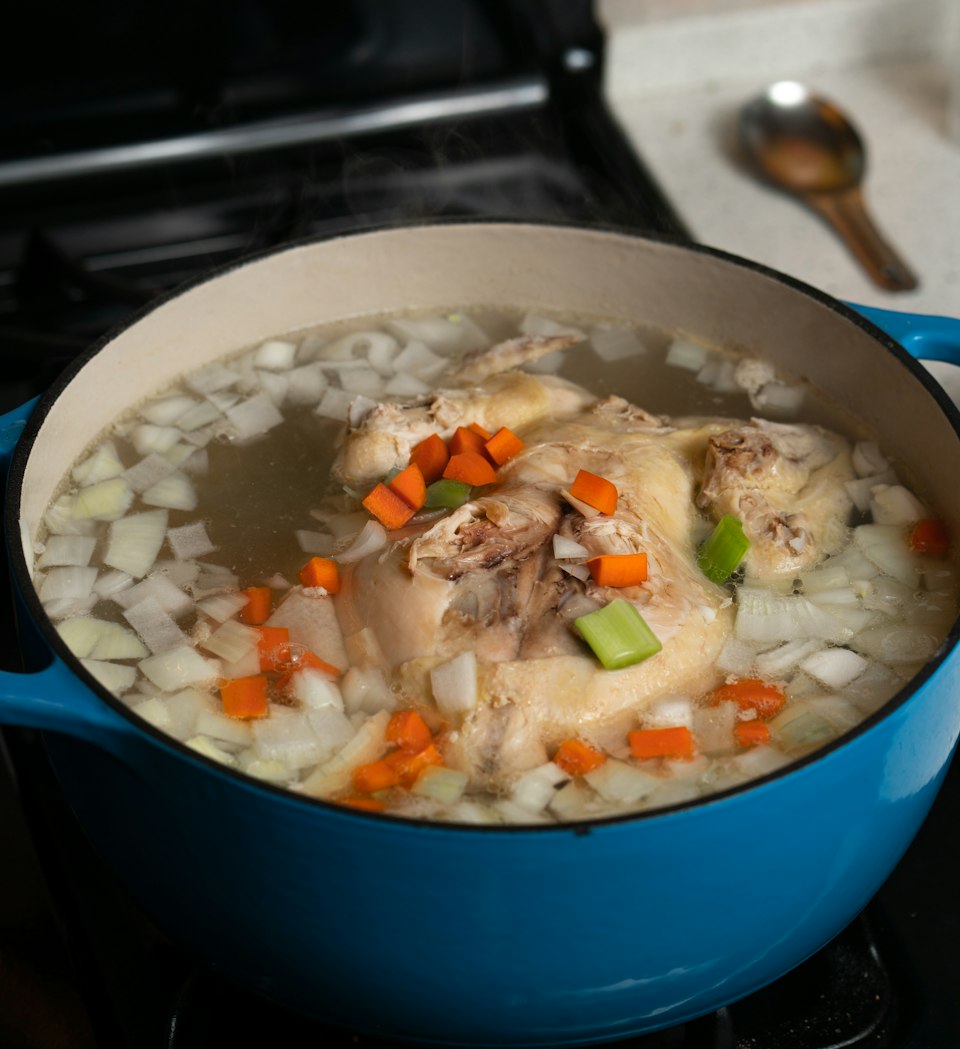
Homemade broth turns the bones from a roast or rotisserie chicken into something genuinely useful. It is richer than most cartons, you control the salt, and it costs almost nothing. Here is how to make chicken broth on the stove, plus a faster pressure-cooker method.
Broth or stock?
Strictly, stock is made mostly from bones and is usually unsalted, while broth is made with more meat and is seasoned to drink. In home kitchens, the words are used interchangeably. This recipe uses a carcass with some meat left on it, so it falls somewhere in between: rich enough for soups and sauces, and delicious as it is with a pinch of salt.
Ingredients
Makes about 8 cups (2 litres).
- 1 roasted chicken carcass, including skin, wing tips and any leftover bits (or about 2 to 3 lb / 1 to 1.4 kg raw chicken wings, backs or necks)
- 1 large onion, quartered (no need to peel)
- 2 carrots, cut into chunks
- 2 celery stalks, cut into chunks
- 2 cloves garlic, smashed
- 1 bay leaf, a few parsley stems, and a sprig of thyme
- 1 teaspoon whole black peppercorns
- About 12 cups (3 litres) cold water
Keep a bag in the freezer for onion ends, carrot peels, celery leaves and parsley stems, and for carcasses until you have time to make broth.
How to make chicken broth on the stove
- Combine. Put the bones, vegetables, herbs and peppercorns in a large stockpot and add cold water to cover by about 2 inches (5 cm). Starting cold draws more flavour and protein out gradually.
- Bring to a simmer. Heat over medium-high until just simmering, then immediately reduce the heat so only a few bubbles break the surface. A hard boil emulsifies the fat into the liquid and makes the broth cloudy and greasy.
- Skim. For the first 20 to 30 minutes, skim off the grey foam that rises to the surface with a large spoon.
- Simmer gently. Cook uncovered or partly covered for 3 to 4 hours, topping up with water if the bones are exposed. Longer cooking extracts more gelatin, which gives broth body.
- Strain. Pour through a fine-mesh strainer into a large bowl or pot. Press lightly on the solids, then discard them.
- Season. Leave it unsalted if you'll reduce it for sauces; otherwise add salt to taste.
Faster: pressure cooker method
Put everything in a pressure cooker, add water to no higher than the maximum fill line, and cook at high pressure for 90 minutes. Let the pressure release naturally. Pressure-cooker broth is often clearer and more gelatinous than stovetop broth.
Cool it quickly
A big pot of hot broth can stay in the danger zone (40 to 140°F, 4 to 60°C) for hours if you leave it to cool on its own. To cool it safely within 2 hours, set the pot or bowl in a sink of ice water and stir, or divide the broth among shallow containers before refrigerating.
Once chilled, the fat rises and sets as a layer on top. Lift it off and discard it, or save it for roasting potatoes. If the broth below has set like jelly, congratulations: that's gelatin, the sign of a rich broth. It melts back to liquid when heated.
How long homemade broth lasts
- Fridge: 3 to 4 days in a sealed container.
- Freezer: 2 to 3 months for best quality. Freeze it in 1- or 2-cup portions so you can thaw only what you need, and leave headspace in jars because liquid expands as it freezes. Ice-cube trays are handy for small amounts for pan sauces.
Bring refrigerated or thawed broth to a full boil before using it. For more detail on freezing, see how to freeze soup safely.
No bones? Using bouillon
To make broth from bouillon, dissolve 1 bouillon cube or 1 teaspoon of bouillon powder or paste in 1 cup (240 ml) of hot water, or follow the jar's directions. Bouillon is much saltier than homemade broth, so reduce the salt elsewhere in the recipe.
Ways to use it
Use it in place of water for rice, as the base for our roasted butternut squash soup or creamy tomato soup, or in the sauce for a chicken and broccoli stir-fry. Wondering about the chicken meat itself? See how long cooked chicken lasts.
Recipes from this article
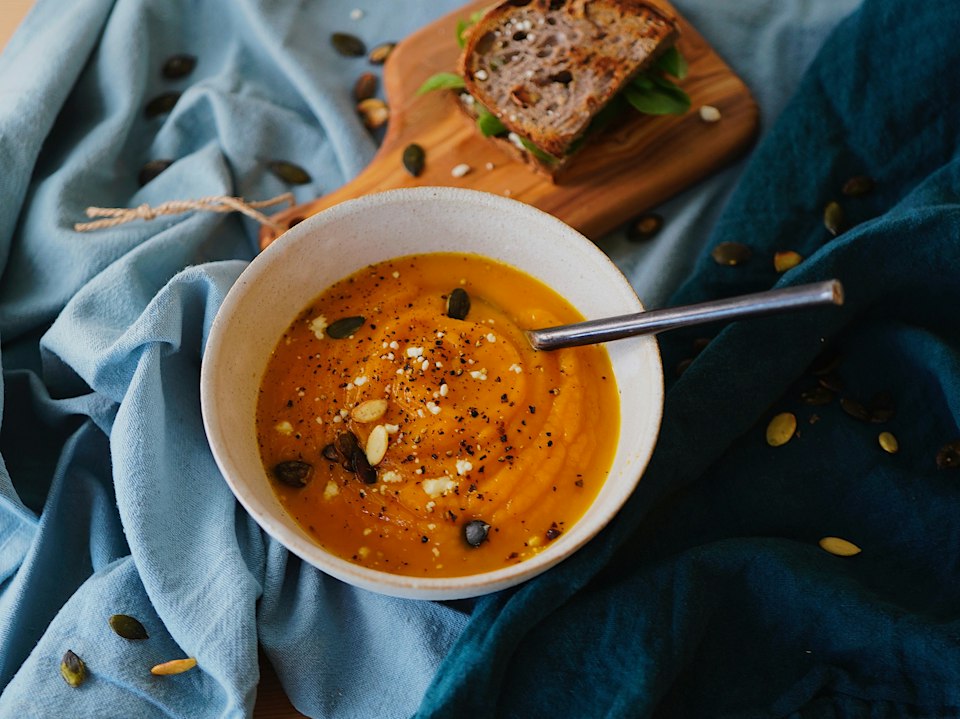
Roasted Butternut Squash Soup
Silky vegan butternut squash soup: the squash is roasted first for deeper flavour, then simmered with onion, garlic and a little nutmeg.
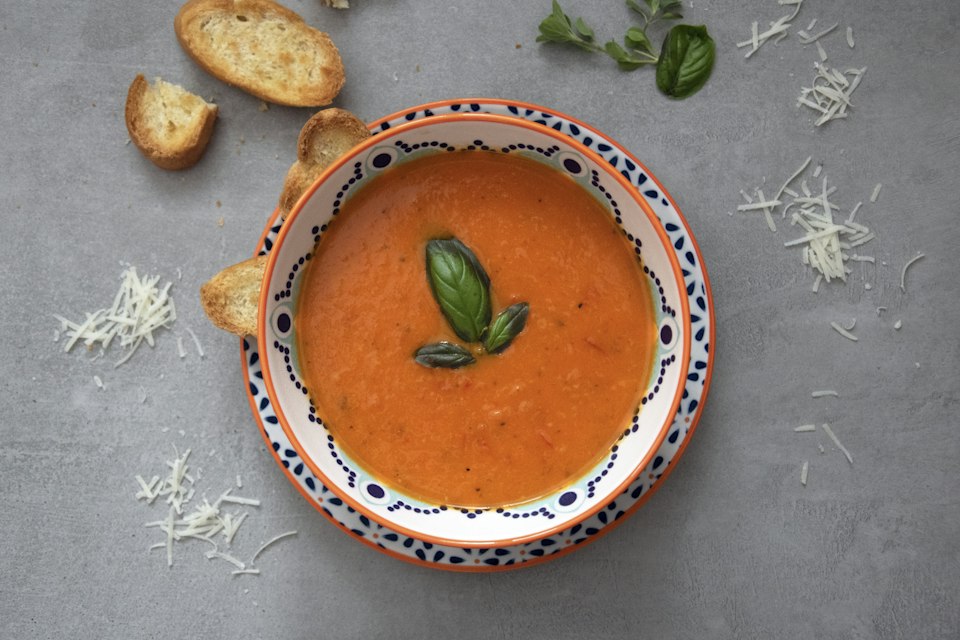
Creamy Tomato Soup
Smooth tomato soup made from canned whole tomatoes, onion and garlic, finished with cream and basil. About 40 minutes.
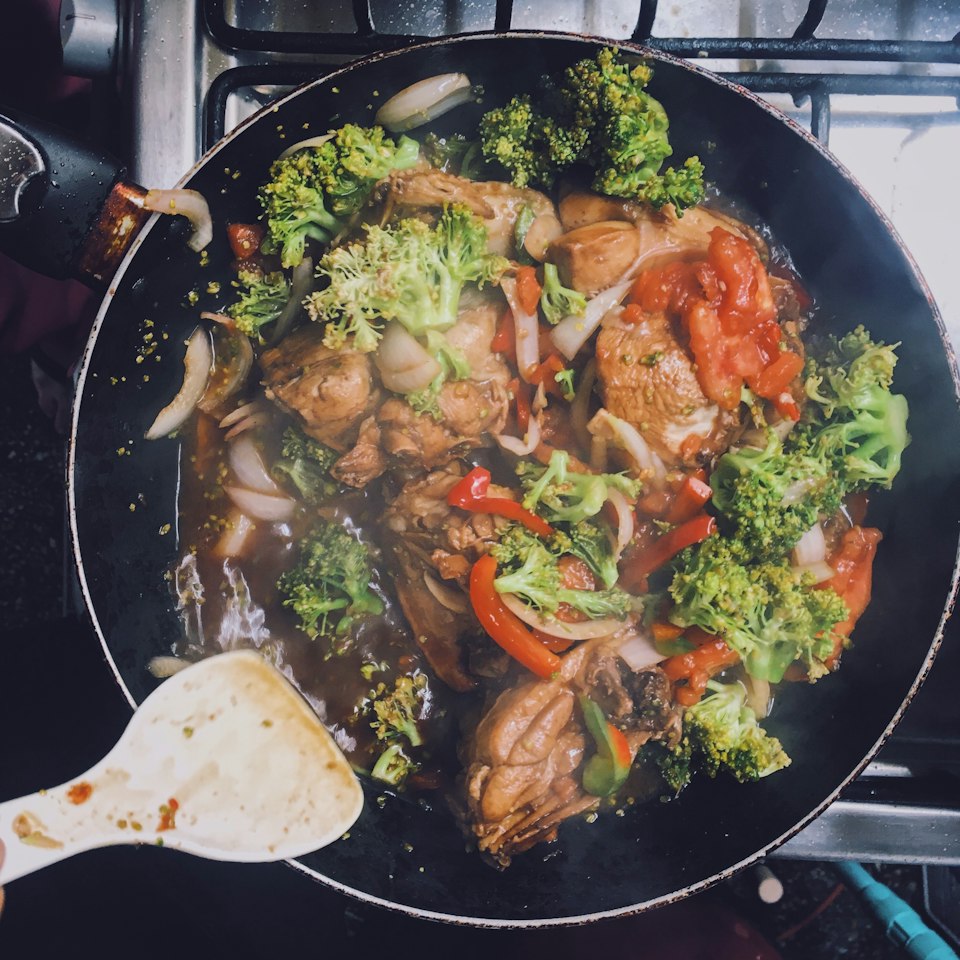
Chicken and Broccoli Stir-Fry
Tender sliced chicken and crisp broccoli in a glossy garlic-ginger soy sauce. About 30 minutes, served over rice.
More from the blog
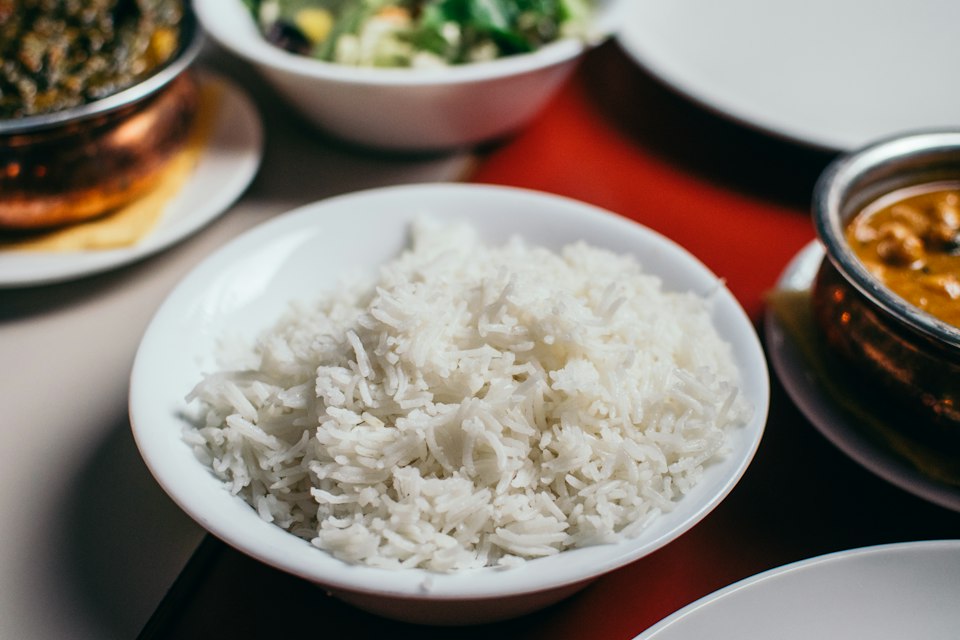
How to Cook Rice on the Stove (Fluffy Every Time)
How to cook rice on the stove: water ratios for white and brown rice, timing, why resting matters, and how to store cooked rice safely.
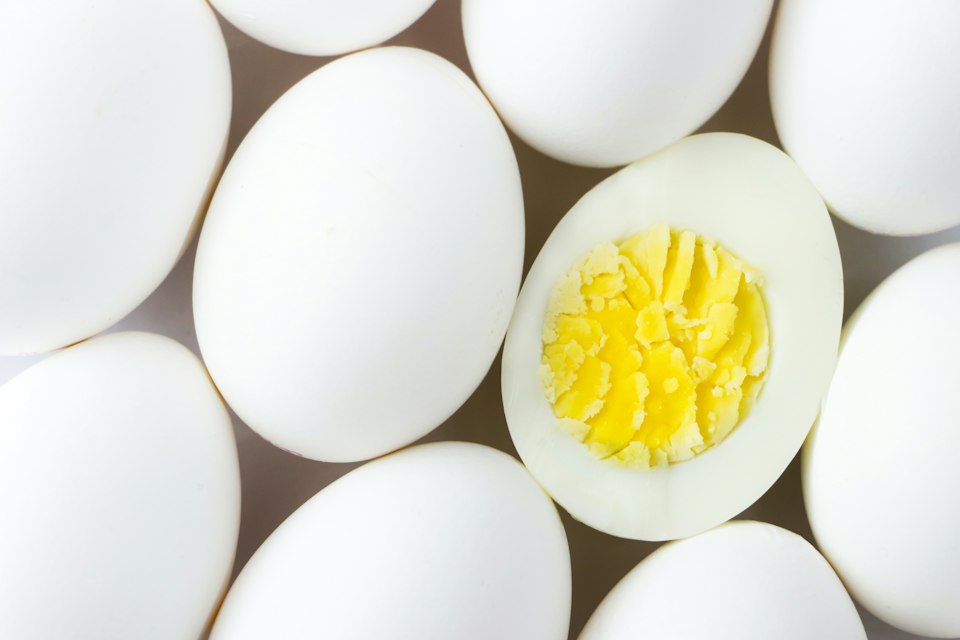
How to Hard Boil Eggs That Are Easy to Peel
How to hard boil eggs with tender whites and no green ring, two reliable methods, a timing chart for soft to hard yolks, and tips for easy peeling.